

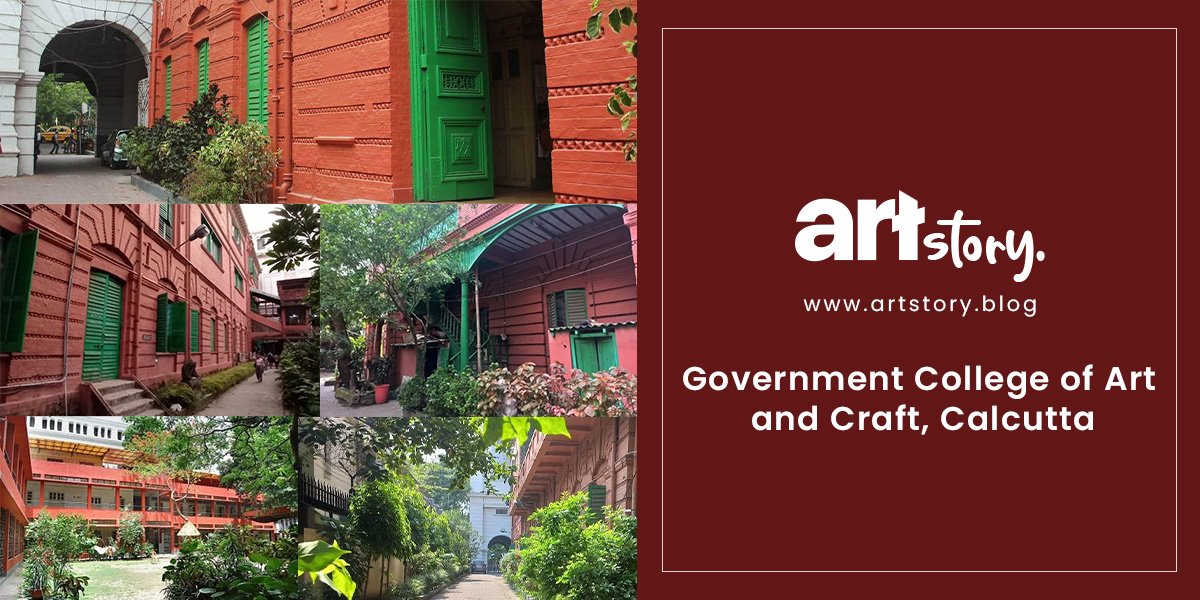
If you walk down Jawaharlal Nehru Road in Kolkata today, right next to the grand white building of the Indian Museum, you will see a beautiful, old red-brick building. It looks quiet from the outside, but if these walls could talk, they would tell you the story of how India found its artistic soul.
This is the Government College of Art and Craft (GCAC), Calcutta.
When we talk about the great masters of Indian art—Abanindranath Tagore, Nandalal Bose, Jamini Roy, or Zainul Abedin—we are actually talking about the students and teachers of this very college. It is not just a school; it is the holy temple of modern Indian art.
Welcome to another deep-dive on artstory.blog. Today, let’s travel back in time to see how a college started by the British to train Indian carpenters and draftsmen turned into the center of India’s artistic freedom struggle.
Chapter 1: The Humble Beginnings (1854)
Believe it or not, the college did not start as a place for “fine arts.”
In 1854, the British rulers, along with some wealthy Bengali gentlemen like Mutty Lall Seal, started a small school in the Garanhata area of Chitpur, Calcutta. It was called the School of Industrial Art.
Why was it started? The British needed cheap, skilled Indian workers. They wanted to train Indians in pottery, wood-carving, drafting, and metalwork so they could help build British buildings and furniture. They did not want Indians to paint grand portraits or express their feelings; they just wanted good craftsmen.
In 1864, the government officially took over the school, and a British man named Henry Hover Locke became its first Principal. Finally, in 1892, the college moved to its permanent, iconic home—the red-brick building next to the Indian Museum in Chowringhee, where it still stands today.
Chapter 2: The E.B. Havell Revolution
For many years, the college taught exactly what the British wanted. Students were made to sit and copy ancient Greek and Roman statues. They were taught that European oil painting was the “best” art and Indian art was “backward” and “unscientific.”
But in 1896, a new British Principal named Ernest Binfield Havell (E.B. Havell) arrived. He changed everything.
Unlike other British officers, Havell deeply loved Indian culture. He walked into the college, looked at the students copying European statues, and was furious. He believed that forcing Indians to paint like Europeans was destroying their natural talent.
Havell did something unimaginable. He removed the European statues from the classrooms! Instead, he brought in beautiful Mughal miniature paintings, Rajput art, and Indian sculptures. He told the students: “Look at your own history. You belong to the land of Ajanta and Ellora. Stop copying the West!”
This decision caused a huge protest. The British press criticized him, and even some Indian students who wanted to learn Western styles were angry. But Havell stood his ground. He knew Indian art needed to be reborn.
Chapter 3: The Magical Partnership (Abanindranath Joins the College)
Havell knew he could not bring this revolution alone. He needed an Indian master to guide the students. He found that master in Abanindranath Tagore.
In 1905, Havell convinced Abanindranath Tagore to join the college as the Vice-Principal. This was the turning point in Indian art history.
Together in the classrooms of this college, Abanindranath and Havell created the Bengal School of Art. Abanindranath started teaching the beautiful, soft, watercolor “wash” technique. He encouraged students to paint stories from the Ramayana, Mahabharata, and Indian village life.
It was in this very college that Abanindranath painted the iconic Bharat Mata (Mother India), and it was in these classrooms that a young student named Nandalal Bose painted Sati. The college was no longer just an art school; it had become the headquarters of the Swadeshi art movement.
Chapter 4: The Golden Era and Legendary Alumni
As the decades passed, the Government College of Art and Craft became a magnet for the greatest creative minds in India. Let’s look at some of the legendary artists who walked these red-brick corridors:
- Jamini Roy: Before he became famous for his bold, folk-art style paintings (which look like Kalighat pats and clay toys), Jamini Roy was a student here. He learned perfect European oil painting in this college before completely rejecting it to find his own Bengali folk style.
- Zainul Abedin: The great master from Bangladesh studied and taught here. His haunting, black-and-white sketches of the 1943 Bengal Famine—showing starving people on the streets of Calcutta—were made when he was connected to this college.
- Somnath Hore & Ganesh Pyne: Moving into the modern era, the college produced artists who showed the darker, more mysterious, and political side of Bengal. Ganesh Pyne’s dark, dream-like paintings have their roots in his training here.
- Bikash Bhattacharjee: Famous for his hyper-realistic, sometimes spooky paintings of Bengali women (like his ‘Doll’ series), Bikash also perfected his unbelievable skills in this institution.
Chapter 5: The College Architecture and Vibe
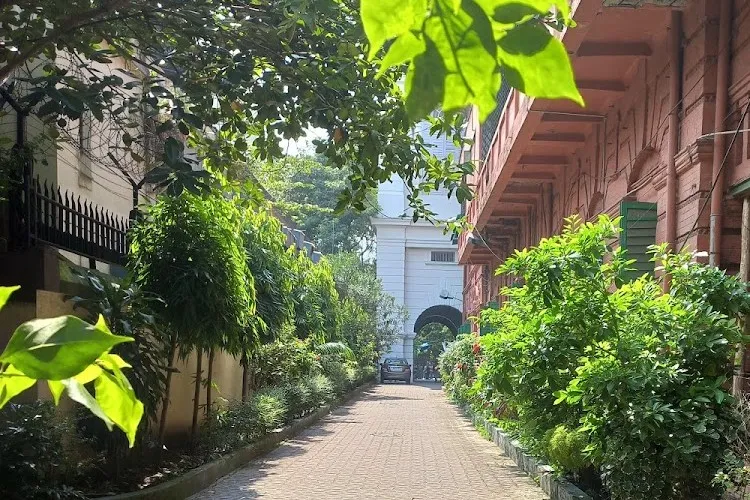
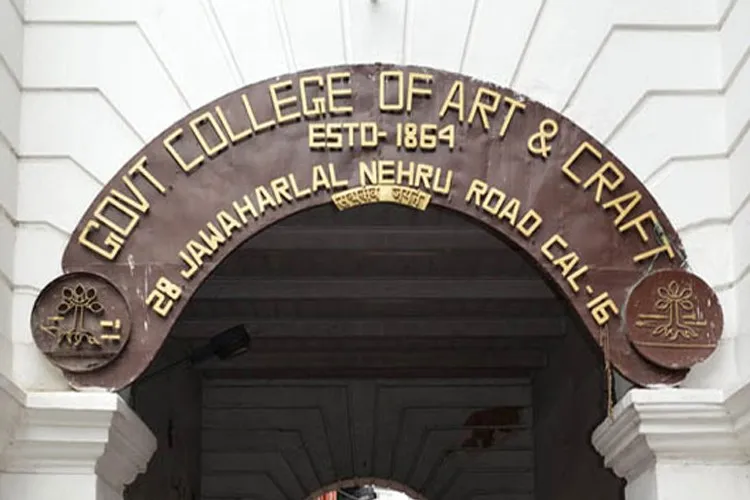
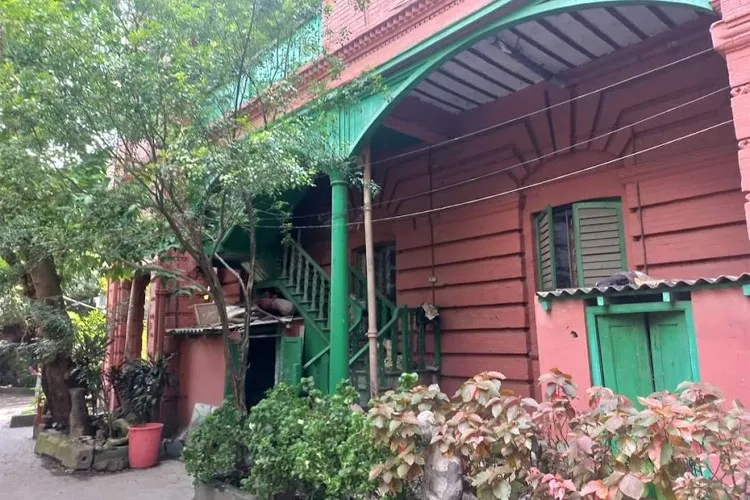
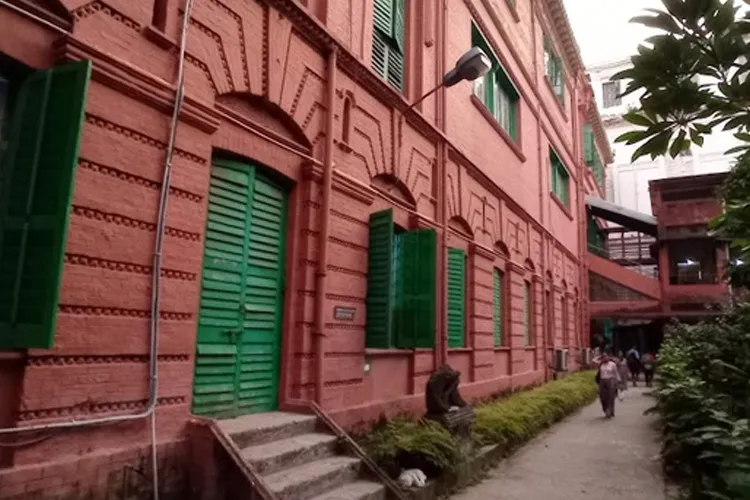
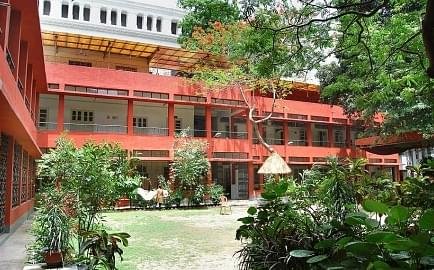
The Look and Feel: If you visit the college today, you can instantly feel the history. The architecture is classic colonial—high ceilings, massive arched windows that let in perfect natural light for painting, and long, quiet corridors.
Because it shares a boundary with the grand Indian Museum, students have historically had direct access to the museum’s massive collection of ancient sculptures, coins, and artifacts. Imagine being an art student and being able to walk next door to study a 2,000-year-old Buddha statue for your homework!
Chapter 6: The Legacy Today
In 1951, the college was finally handed over to the Government of West Bengal, and it was officially named the Government College of Art and Craft.
Today, it continues to teach young, passionate artists in departments like Painting, Sculpture, Applied Art, and Printmaking. While art has become very digital and global today, the students of this college still carry the pride of their history. During the college’s annual exhibition, thousands of art lovers from across Kolkata line up to see the work of the new generation.
Conclusion
The Government College of Art and Craft is not just a building made of red bricks. It is the place where India stopped apologizing for its culture. It is the place where E.B. Havell and Abanindranath Tagore taught Indians to look in the mirror and be proud of their own reflection.
If you truly want to understand Indian art, you have to understand the soil from which it grew. And that soil is right here, in the heart of Kolkata.