

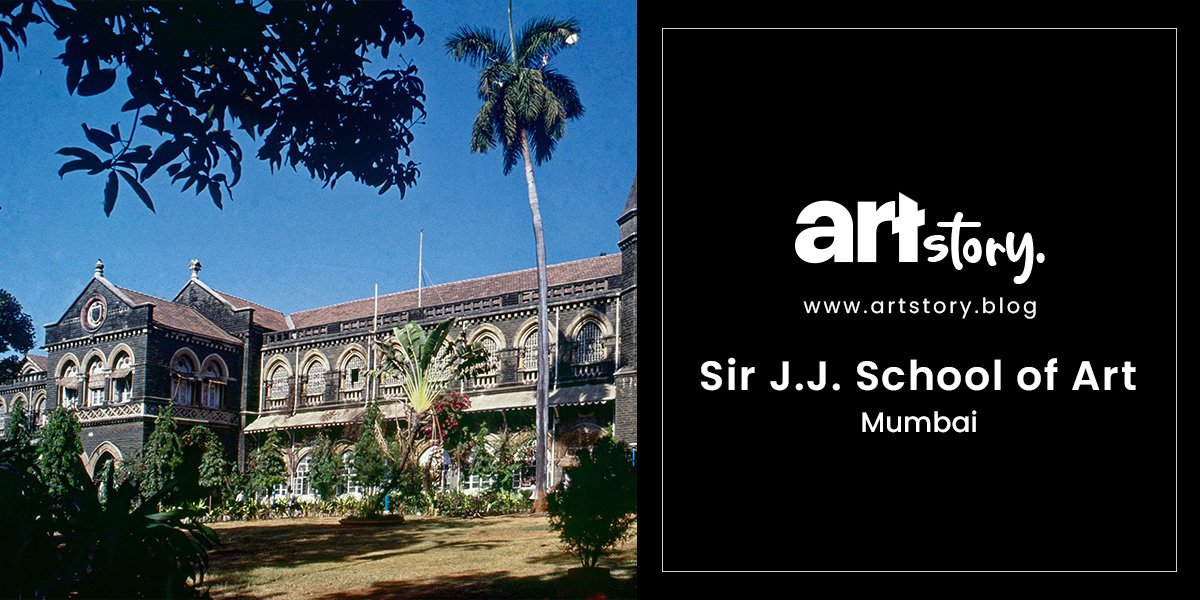
If Calcutta’s Government College of Art taught India how to remember its past, and Shantiniketan taught India how to connect with nature, then Mumbai’s Sir J. J. School of Art taught India how to be modern, bold, and fearless.
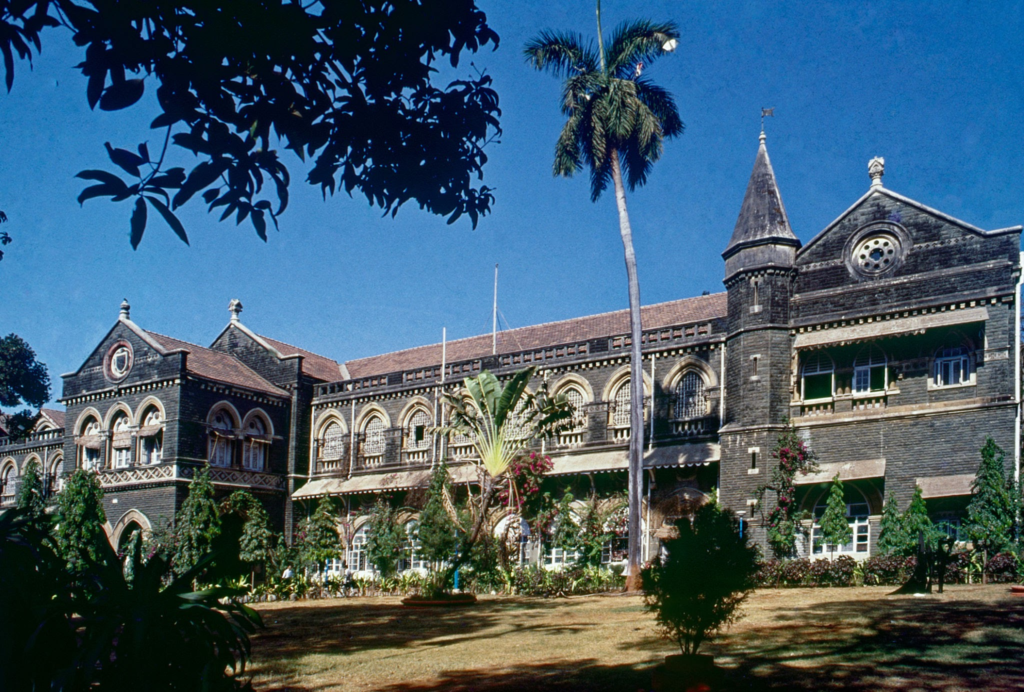
Located in the bustling Fort area of South Mumbai, right next to the famous Chhatrapati Shivaji Maharaj Terminus (CSTM), this college is an oasis of green trees and old Gothic architecture. It is the oldest art institution in Mumbai and the birthplace of India’s most famous, expensive, and rebellious modern artists.
Welcome back to artstory.blog. Today, we travel to the fast-paced city of dreams to explore how an art school started by a Parsi diamond merchant ended up creating the “Progressive” art movement of India!
Chapter 1: The Parsi Philanthropist (How It All Started)
In 1857, while the Sepoy Mutiny (the First War of Independence) was raging in northern India, something very quiet and beautiful was happening in Bombay (now Mumbai).
A highly successful Parsi businessman and philanthropist named Sir Jamsetjee Jeejeebhoy offered a massive donation of Rs. 1,00,000 to the British government to set up an art school. He wanted to train Indians in drawing, painting, and design so they could work in the growing industries of the city.
The British agreed, and the Sir J. J. School of Art and Industry was born.
Unlike Abanindranath Tagore’s Bengal School, which hated Western art, the early teachers at J.J. School fully embraced it. They taught students strict European “Realism”—how to paint muscles perfectly, how to use oil paints on canvas, and how to draw correct perspectives. For many decades, J.J. School was the ultimate place to learn perfect, academic Western art in India.
Chapter 2: The Kipling Connection and Crawford Market
Did you know that the author of The Jungle Book, Rudyard Kipling, was born right here on the campus of the Sir J. J. School of Art?
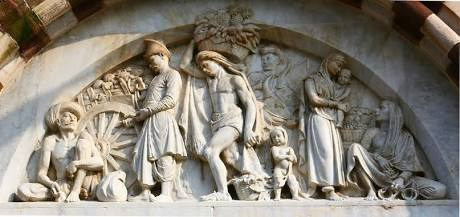
His father, John Lockwood Kipling, was a British artist who joined the college in 1865 as the first Professor of Architectural Sculpture. Lockwood Kipling was fascinated by Indian craftsmen. He would take his students out of the classrooms and tell them to design the carvings for the grand new buildings coming up in Bombay.
If you visit the famous Crawford Market or the Victoria Terminus in Mumbai today and look at the beautiful stone carvings of Indian farmers, animals, and flowers on the walls—those were designed by Lockwood Kipling and carved by the brilliant students of the Sir J. J. School of Art!
Chapter 3: The “Bombay Revival” and Gladstone Solomon
In 1919, a very energetic man named Captain W. E. Gladstone Solomon became the Principal of the college. He saw what the Bengal School was doing in Calcutta (rejecting Western styles completely), but he disagreed.
He believed that Indian artists did not need to throw away Western oil painting techniques. Instead, they could use those powerful Western techniques to paint beautiful Indian subjects—like the Ajanta murals, Hindu gods, and Indian village women. This mixed style became known as the “Bombay Revival.”
During this time, the college produced its first great Indian masters. One of the most famous was M. V. Dhurandhar. He became the first Indian Director of the school. Dhurandhar painted breathtaking, highly realistic oil paintings of Indian mythological scenes and the daily life of Maharashtrian women. His work was just as popular as Raja Ravi Varma’s!
Chapter 4: The 1947 Rebellion (The Progressive Artists’ Group)
Everything changed in 1947. India got its independence, and the young artists studying at J.J. School felt a sudden burst of rebellious energy.
A group of brilliant, angry, and highly passionate students—including F. N. Souza, S. H. Raza, M. F. Husain, K. H. Ara, and H. A. Gade—decided they were completely bored. They didn’t want to paint sweet, soft watercolors like the Bengal School, and they didn’t want to paint stiff, realistic British portraits anymore.
They wanted to paint the raw, harsh, fast-paced reality of modern India using bold colors, distorted shapes, and abstract lines. They formed the Progressive Artists’ Group (PAG).
F. N. Souza was actually expelled from the Sir J. J. School of Art for pulling down the British flag and joining the Quit India movement! But this exact rebellious spirit is what made these artists global legends. Today, paintings by M.F. Husain, V.S. Gaitonde, and S.H. Raza sell for hundreds of crores around the world. They all share the J.J. School DNA.
Key Insight: S.H. Raza started his journey painting realistic watercolor landscapes of Mumbai at J.J. School, but later evolved into pure abstraction, famously exploring the Indian concept of the “Bindu” (the central dot of energy).
Visualizing the Journey
To help you see how the institution evolved from a colonial craft school to the birthplace of modern Indian abstraction, explore this interactive timeline:
Chapter 5: The Campus Vibe Today
If you visit the campus today, stepping inside the gates feels like leaving Mumbai’s traffic noise behind.
The main building is a masterpiece of Victorian Gothic architecture, made of dark basalt stone. Massive old trees completely cover the sky. Deep inside the campus is the famous Kipling Bungalow—the original wooden house where Lockwood Kipling lived, made entirely of Burmese teakwood.
Walk through the corridors, and you will smell turpentine, oil paints, and hot cutting-chai from the local canteen. You will see students sketching in the gardens, arguing about art theories, and working late into the night preparing for their annual exhibitions.
Conclusion
The Sir J. J. School of Art is the bridge between traditional Indian craftsmanship and global modernism.
While Calcutta and Shantiniketan taught us to look inward to our roots, Mumbai’s J.J. School taught us to look outward to the world. It produced the commercial designers who built Bombay, the painters who commanded the global art markets, and the rebels who showed us that Indian art can be whatever it wants to be.
Next time you are in South Mumbai, take a walk past the JJ Flyover. Look at the old stone walls and remember—the biggest, boldest colors of India were mixed right inside those gates.